The conclusion of COP30 followed a dramatic twenty-four hours when a fire, caused by a blown fuse, broke out at the venue on Thursday afternoon, briefly pausing negotiations. The timing was poor; most delegations were due to depart on Saturday night, leading to a tense and dramatic rush to conclude proceedings. While the final document was not entirely satisfactory to all and notably excluded any mention of a fossil fuel phase-out, it was not, however, a true reflection of the preceding two weeks of intense work.
Inspired by faith, the Catholic Church’s strong presence offered a powerful testimony from the grassroots. Bishops spoke at side events about how their communities suffered directly from climate-induced disasters, while local and indigenous groups joined activist marches outside the main conference. Catholic NGOs coordinated professionally to ensure their crucial messages were heard by negotiators and decision-makers.
The negotiations did result in some hard-fought wins for the world’s poorest. A key achievement was approving the Belém Action Mechanism, a new, permanent body proposed by civil society. This mechanism will track the global transition away from fossil fuels, providing essential resources and support. Crucially, it ensures that the livelihoods of workers, including miners and indigenous peoples, are considered during the shift to cleaner technologies.
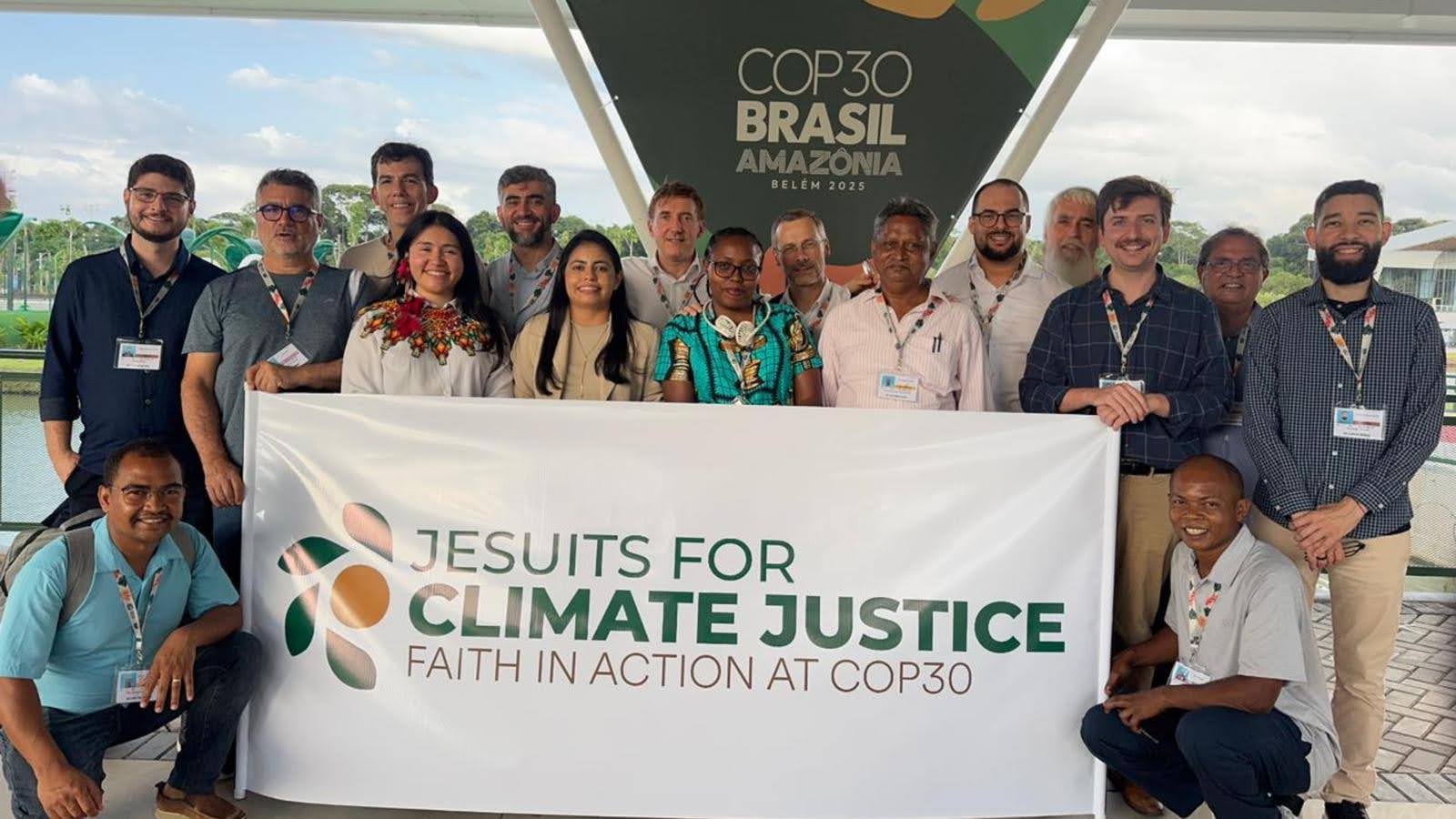
Additionally, the presence of the Jesuits was a powerful one, notably through the Jesuits for Climate Justice campaign. This group of 20 Jesuits and lay collaborators followed the negotiations throughout the two weeks, participated in key side events, and hosted two receptions for those participating at COP. One significant highlight of this campaign was the opportunity to present a statement from the delegation to COP President André Corrêa do Lago, followed by a press conference hosted on the final day to speak about the specific Jesuit demands.
I walk away from COP30 motivated and pleased, believing that positive change is indeed happening one step at a time, with the Church diligently pressing for it.
Colm Fahy
JESC Ecology Advocacy Officer
Ps. Extensive analysis of the COP30 negotiations and final outcomes are available from Carbon Brief and World Resource Institute. An analysis by Gaël Giraud SJ, JESC Senior Officer and part of the Jesuits for Climate Justice delegation, is also available here.