Caring for Creation in Sardinia:
The Church Tested by Integral Ecology
“The work of the Church seeks not only to remind everyone of the duty to care for nature, but at the same time “she must above all protect mankind from self-destruction”: thus Pope Francis states in Laudato Si’, inviting each person and the whole Church to an ecological conversion. Ten years after the publication of the Encyclical, what is the role of the Catholic Church in the care for Creation? What “sign-works” has it undertaken? And what kind of awareness has the People of God developed?
If the Church’s Social Magisterium, starting from 1990, has developed an increasingly solid, articulated and prophetic stance on environmental issues, it is worth asking whether local ecclesial realities and Christian communities have done the same, whether they have played “an important role […] in this education, […] in grateful contemplation of the world, and in care for the fragility of the poor and of the environment.” The mobilization of the Church, in an educational, spiritual and socio-political dimension, does not, in our view, merely represent the emergence of a more or less adequate response to a global problem, or an attempt at urgent and partial solutions. Rather, it constitutes a significant indicator of the vitality of Christian communities, of their deep unity and, above all, of the relevance of faith to the whole of life: it is a matter of “a spirituality of integral ecology, spirituality of integral ecology, outside of which the words of faith have no hold on reality and the words of science remain outside the heart”.
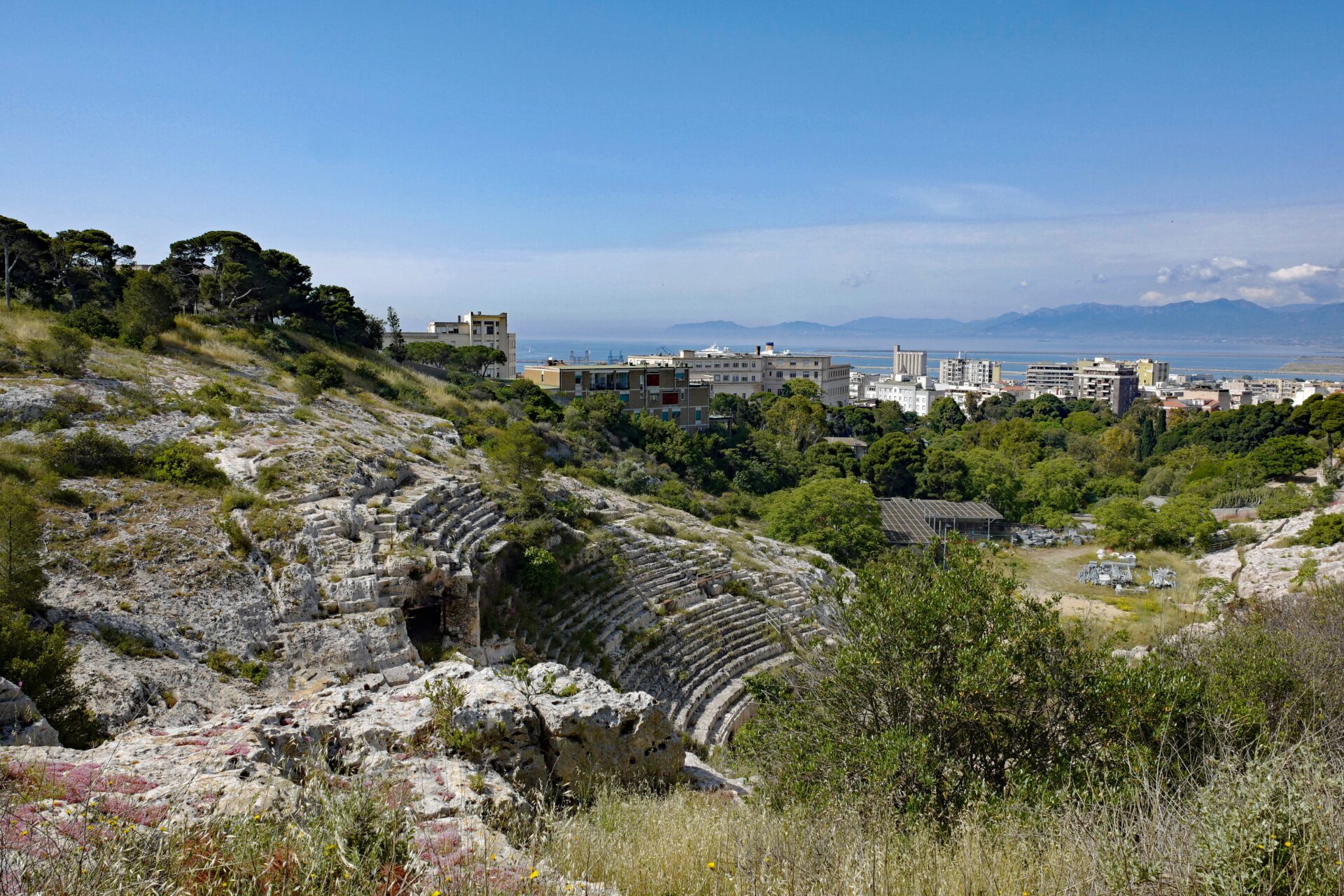
In order to understand this incisive and recurring dimension in the words of the Pontiffs and in the cry that rises from the Earth, we deemed it necessary to begin from experience and thus to analyze and uncover a concrete reality that can bear witness to the approach of ecclesial realities to this theme. Thus, for affective as well as territorial reasons, the choice fell on Sardinia. It bears witness to the fact that integral ecological conversion cannot be an automatic process, but rather the true fruit of an increasingly lived awareness of dependence on and belonging to God. The Island, the third largest in the Mediterranean, is rich in powerful identity traditions, yet at the same time it is a historic crossroads of cultures and peoples; despite this, it has preserved its landscape in a state of apparent unspoiledness. It can boast 1.2 million hectares—40% of its territory—covered by forest area, an absolute record in Italy, as well as good air quality and excellent seawater quality over 97% of its coastline. For these reasons, and because of its wild and fascinating nature, Sardinia is often regarded as a kind of earthly paradise. At the same time, alongside its natural charm, the Island faces future climate variability that will lead to rising temperatures, as well as numerous anthropogenic factors that impact its climatic well-being, such as industrial pollution—with consequent problems of soil, air and water contamination—and the controversial issue of military pollution, still the subject of intense debate and study. It is a microcosm in which tensions between conservation, industrial development and community fragility emerge. This multifaceted picture leads us to consider and analyze this land not merely through the sometimes distorting lenses of tourism or marginality, not as a periphery of Europe, but rather as a possible open-air laboratory of creativity, care and responsibility, capable of countering an anesthetizing idea of beauty.
Within this plural reality, alongside institutions and civil society, stands the Church, an actor present capillarily throughout the territory. Dioceses, parishes, Caritas and Catholic associations of various kinds are deeply intertwined with the life of local communities, and the population often remains closely connected to ecclesial life and faithful to traditions.
This makes it both relevant and natural to ask what the impact of such a reality—so deeply integrated into people’s lives—has been and could be on the construction of social thought and awareness regarding the care for Creation, from the perspective of integral ecology. Even before that, one must ask: has the Church itself, in its principal and institutional actors, allowed itself to be shaped by this perspective? Has it allowed an ecological conversion to take place within itself? What is its approach and attention to the common good? To what extent have Christian communities adopted integral ecology as a pastoral criterion? And, finally, how does the ecclesial reality position itself with regard to major social issues?
As noted earlier, many of those we interviewed consider Sardinia an unspoiled earthly paradise. While this evidently generates a strong sense of identity and pride, it also produces a perception—highlighted by Prof. Fr. Giuseppe Tilocca and confirmed by others—that Sardinia, precisely because of its apparent unspoiledness, has not developed a shared environmental awareness and does not require interventions for the care of Creation, as if the aesthetics of the landscape concealed the ethics of responsibility. What emerges is a collective imaginary that acts as a cultural anesthetic, whereby environmental issues are perceived solely as external threats, or even as someone else’s problem, but rarely as the result of choices or inertia that can occur locally. We might define this as a subtle form of “environmental Pelagianism,” whereby the Island is believed capable of saving itself. What need would there be to worry about Eden? The Church, incarnated and exercising its ministry among the people in society, remains strongly conditioned by these ideas and impressions. In this context, concrete commitment to the care for Creation appears inconsistently among the “new challenges” from which “this teaching (the Social Doctrine) is called to be enriched by taking up.” In certain respects, it remains a niche commitment, in the face of a majority of ecclesial realities that, according to interviewees, have not yet integrated integral ecology into ordinary pastoral practice. If the Magisterium has clarified that integral ecology is an indispensable part of the Church’s Social Doctrine and thus of the pastoral horizon, the real challenge in Sardinia lies in generating an impact of this Magisterium at the level of social conscience and ordinary practice.
What we have observed returns a picture of Sardinia that is in some ways controversial: rich, yet at the same time fragmented and parcelled. Numerous initiatives can be identified that aim to educate and foster a harmonious relationship between the environment and the human person, starting from the institutional level—with social and labor pastoral offices, Caritas and diocesan projects—down to movements and local associations, such as the Banco Alimentare della Sardegna, the MEIC (Ecclesial Movement of Cultural Commitment), the Laudato Si’ Movement and the Scouts. Many of these primarily play a role in raising awareness within society through periodic events or symbolic or prayer initiatives. Exemplary in this regard are events during the Season of Creation and the ecological walk organized by the Ecumenical Group, as well as occasional formation meetings promoted by the MEIC or Social Pastoral Offices.
On the educational level, the initiative of the Pontifical Faculty of Theology deserves particular mention. Since the early 2000s it has offered thematic courses on the relationship with Creation and, since the publication of Laudato Si’, courses focused on the papal document itself, with the hope of educating—of sowing seeds that are sometimes invisible—for a new Christian and human awareness of oneself in relation to the Other. Despite this initiative, however, structured and planned interventions remain rare, both at the educational and pragmatic levels, that aim to directly impact the struggle for Creation. In this regard, it is striking that while European emission-reduction goals could engage faith-based organizations in the sustainable management of their real estate assets, such involvement is only now beginning, through attempts at energy communities, particularly—as we shall see later—in the Cagliari area.
Despite the limited scope of initiatives, Sardinia abounds in people of good will who are willing to offer their time, creativity and energy in service of the common good, in response to the Church’s calls. This often occurs in forms detached from institutional channels, starting instead from personal conscience and civic concerns, compared with the Church’s judgment. Thus, realities such as the RWM Reconversion Committee, founded in 2017, and the related association WarFree came into being, with the aim of proposing realistic and alternative options, as well as training and information pathways, to the arms-producing company RWM. These two entities, which bring together 20 associations and 130 individuals, actively work for the safeguarding of the territory and for peace, from an integral perspective, through meetings (40 events over seven years), studies and professional support for environmentally sustainable enterprises. Their commitment arises from below, and at the root of this project—according to one of the founders—lies an experience of faith lived within the Focolare Movement and deepened through the Magisterium. In these lay people, social engagement and the attempt to build a more just reality born of faith create a synthesis between being “artisans of peace” and being “custodians of Creation.”
The existing realities—such as the NoSprecor association, local expressions of the Laudato Si’ Movement, or the Domus association—apart from a few with more structured and extensive organization, have a locally incarnated scope, with action focused on a single town or area, or on individual initiatives affecting a specific territory. For example, NoSprecor and Domus provide food redistribution services and the recovery of damaged goods, particularly in the Oristano area, while the Laudato Si’ Movement in Sardinia is developing especially within the community of Ussana. While such an approach on the one hand offers good opportunities for listening to the territory and to individuals, the impressions we received indicate that it rarely intersects with broader, regional planning.
If the Church has not hesitated to issue documents of denunciation and judgment on certain issues closely affecting the Island, other fronts reveal pressing internal challenges for the Church’s social vision. On the one hand, with a certain sense of suffering, a disengagement has been noted in many local realities and parishes from analysis, judgment and communication regarding the challenges to be faced and the awareness to be developed in relation to the surrounding environment—rendering the action of social pastoral offices less incisive. On the other hand, difficulties have emerged in collaboration even among central offices, with action divided into “watertight compartments,” thus not integrated into the whole life of the Church. An overall look at the regional reality suggests that the true challenge today lies in fostering a synthesis of the energies at play. More than isolated interventions, there is a perceived call to develop a choral style, capable of translating the richness of local initiatives into a more incisive and unified ecclesial witness within society.
Nevertheless, one element cannot be overlooked: faced with central structures struggling to find a unified and concordant language, there are further efforts that the Sardinian Church has produced over the decades, creating a bridge between the cry of humanity and that of the Earth. This is a praxis in which care for Creation does not stem from mere adherence to “green” trends, but from service that recognizes the environment as the very condition of human dignity. In this regard, the activity of the Sardinian Banco Alimentare emerges as a significant operator of integral ecology. From their testimony it emerged that, for them, the safeguarding and care of Creation are intrinsically linked to attention to the most vulnerable, having developed an awareness of being workers for all Creation. Through the recovery of thousands of tons of food surplus, not only is hunger addressed, but direct climate mitigation is achieved: food recovery (and support for 22,000 people in Sardinia) results in the reduction of over 2,000 tons of CO₂ emissions per year, as well as savings in vital water resources in a land constantly threatened by drought. The fight against waste—human, food-related and environmental—thus becomes the cornerstone for building concrete social justice.
Similarly, in the Gerrei region, the Caritas-led project “Terre Ritrovate” goes beyond social agriculture. Initiated several years ago with the enhancement of the short supply chain for durum wheat through a memorandum of understanding between Caritas and Agris Sardegna, the project now continues with the support of the Giulini Foundation. Its aim is to revitalize the supply chain and recover abandoned lands, now nourished with organic fertilizer of biological origin. From this derive wheat-based products such as pasta and bread, which are marketed online in collaboration with 15 producers. The initiative integrates, within a single endeavor, a partnership between public bodies, private actors and the third sector—an attempt at redeeming the territory both as a human and natural landscape. In this dimension, agriculture becomes an instrument of dignity for workers, land revitalization, care for the earth and a future for an area often affected by depopulation.
Nor can we omit the still-nascent project of several Energy Communities in the Diocese of Cagliari. The project arises from collaboration among the Terna Foundation, the social enterprise Fratello Sole, Confcooperative Sardegna and Assi.e.me.e. s.r.l. (Assistance to Ecclesial Entities), to establish three solidarity-based energy communities in southern Sardinia. The initiative involves numerous parishes and is designed so that the generated output can act as a catalyst to relaunch social, cultural and employment activities in the area, while offering a sustainable response to energy poverty, which in Sardinia affects 8.9% of the population.
Another factor illuminating the Sardinian panorama is the emergence of environmental reflection rooted in ecumenical dialogue, carried out by Orthodox, Protestant and Catholic denominations present in the territory during the Season of Creation (from September until October 4). Each year, Christian denominations dedicate several days to meditation and prayer, asking forgiveness and contemplating the beauty of Creation. While these two spheres may not appear to share common elements of work and reflection, care for Creation is precisely one of the bonds uniting Christian Churches—one of the places where descent from a single Father and the responsibility this entails become evident. With the participation of several hundred faithful from different denominations, the impact proves positive each year. Although results are not immediately tangible, these initiatives may represent necessary provocations capable of disarming social indifference.
These territorial works and their data reveal the action of faith-based organizations with potential impact in the circular economy and environmental education. From a circular economy perspective, realities such as the Banco Alimentare or reuse centers promoted by networks like NoSprecor, Domus or the Scouts do not merely distribute aid, but intervene directly in consumption cycles. By recovering surpluses that the economic system would consider “waste,” their initiatives enact a logic of charity that reduces environmental impact, avoids waste accumulation and preserves the intrinsic value of resources. It is a concrete application of the principle of subsidiarity that simultaneously generates measurable ecological benefit.
Yet even within these fruitful works, a certain regret continues to emerge over the lack of synchronized collaboration—paradoxically—within the Church itself, highlighting the need for structural evolution. This regret is counterbalanced, however, by what is striking when listening to the voices of key actors in the field: a shared willingness to collaborate and to find solutions beneficial to the Church, communities and society. It is therefore natural that a dispersion of forces—and resources—often limited to one-off initiatives generates frustration among those committed to integral ecology. The atomization of interventions and their limited impact, as some interviewees indicated, are reinforced by a culture of self-sufficiency among individual realities and a lack of long-term planning, often born not of a lack of generosity, but of a transition not yet made toward technical professionalism in action. Some testimonies also highlighted both the value and limits of volunteerism. While it represents an immense patrimony of values and operations—without which not only ecclesial action but often the welfare state itself could not endure—it also risks generating managerial and operational precariousness, as seen in associations forced to reduce activities due to a lack of volunteers, resulting in merely “artisan” outcomes. What clearly emerges is the need to invest in remunerated expertise in order to achieve concrete project results, for example in energy management, and to access external funding, particularly European funds.
In this regard, analyzing an insular reality such as Sardinia, we also questioned its relationship with the European dimension, with knowledge of EU dynamics and access to funds. While the examined realities show conceptual coherence with the European Green Deal—particularly in the fields of circular economy and just transition—the use of funds from direct EU programs is almost nonexistent. Only one initiative, Terre Ritrovate, through a European partnership, accessed the Horizon program. In other cases, access is hindered by the lack of minimum stability requirements or registration in bodies such as the RUNTS (National Single Register of the Third Sector).
Moving toward a European, structured and project-based dimension does not mean turning the Church into an NGO or a well-oiled system driven by technical imperatives. Rather, it means addressing the emerging issues of our time with the seriousness and protagonism required of the baptized. Above all, it involves deepening within Christian communities their relationship with God, supporting and culturalizing the silent witness carried forward by some actors in the territory.
For this reason, it is worth returning to some fundamental questions about the marginality of the Church’s action: what are the deeper motivations? What are the possibilities? As has emerged, without community it is difficult even to conceive of an energy community or the sharing of needs. The difficulty in coordinating local realities, overcoming bureaucratic constraints and pooling resources reveals a communion that rarely becomes structural. Such fragmentation, combined with low thematic interest in various contexts, cannot be reduced to a mere organizational flaw; rather, it reflects something deeper. Perhaps also due to the narrative of the Island as an earthly paradise that anesthetizes risk perception, the Sardinian Church appears as an archipelago of praiseworthy initiatives lacking systematic networking, a shortcoming that risks confining the intuitions of the Magisterium to the symbolic realm.
All this may be the sign of two sides of the same coin: on the one hand, the need for a faith that does not remain mere thought, but becomes a continuous dialogical relationship with the Creator—an incarnate faith; on the other, the need for this concreteness to take shape in the flourishing of Christian communities, the only place where faith can be enlightened by judgment and thus become culture and charity. For this reason, listening to the voices of those involved, it seems necessary to take up this challenge both locally and centrally. It is in the concreteness of a community guided by a pastor that a non-ideological faith capable of impacting life can flourish; at the same time, every community needs clear reference points, guiding lines, exemplary practices and investments that only coordinated central offices, under the bishop’s guidance, can provide. This does not mean creating new offices or dismantling what has already been built for the sake of the environment and humanity, but above all undertaking a profound conversion. From this deeply human-centered perspective, proposals can emerge to develop and coordinate institutions and entities, ensure planning and fundraising, map organizations present in the territory and guarantee networking and central—not only economic—support.
From what we have observed and from the testimonies of actively involved faithful, it is not sufficient for initiatives to occur sporadically or with merely symbolic aims if integral ecology is to become conscience and active freedom. Faced with the Church’s call to an awakening of conscience, some have begun to respond by creating the initiatives analyzed here, yet it remains unclear how these can multiply and become vectors of conversion. At the same time, confirming what has just been said, and seeking an experience-based answer, we have seen—as in the cases of Terre Ritrovate, the Banco Alimentare and the WarFree Association—that when multiple actors are moved by a shared conscience, incisive works emerge in the territory. Thus, if the Church wishes to realize her full potential for action, a decisive return to Christian communities as places for rediscovering the new criterion and judgment introduced by the life of faith is required—a criterion that must be communal, shared and thus felt as vital. Only in this way can ecological action become a work and a project to propose to the world, offering Sardinia and its inhabitants a renewed and healed conscience and vision of the world and of Creation. What is at stake is not only the environment and harmony with Creation; what is at stake is a possibility for faith itself: that it be incarnate.
Giacomo Emanuele Pisano
JESC Intern (2025)