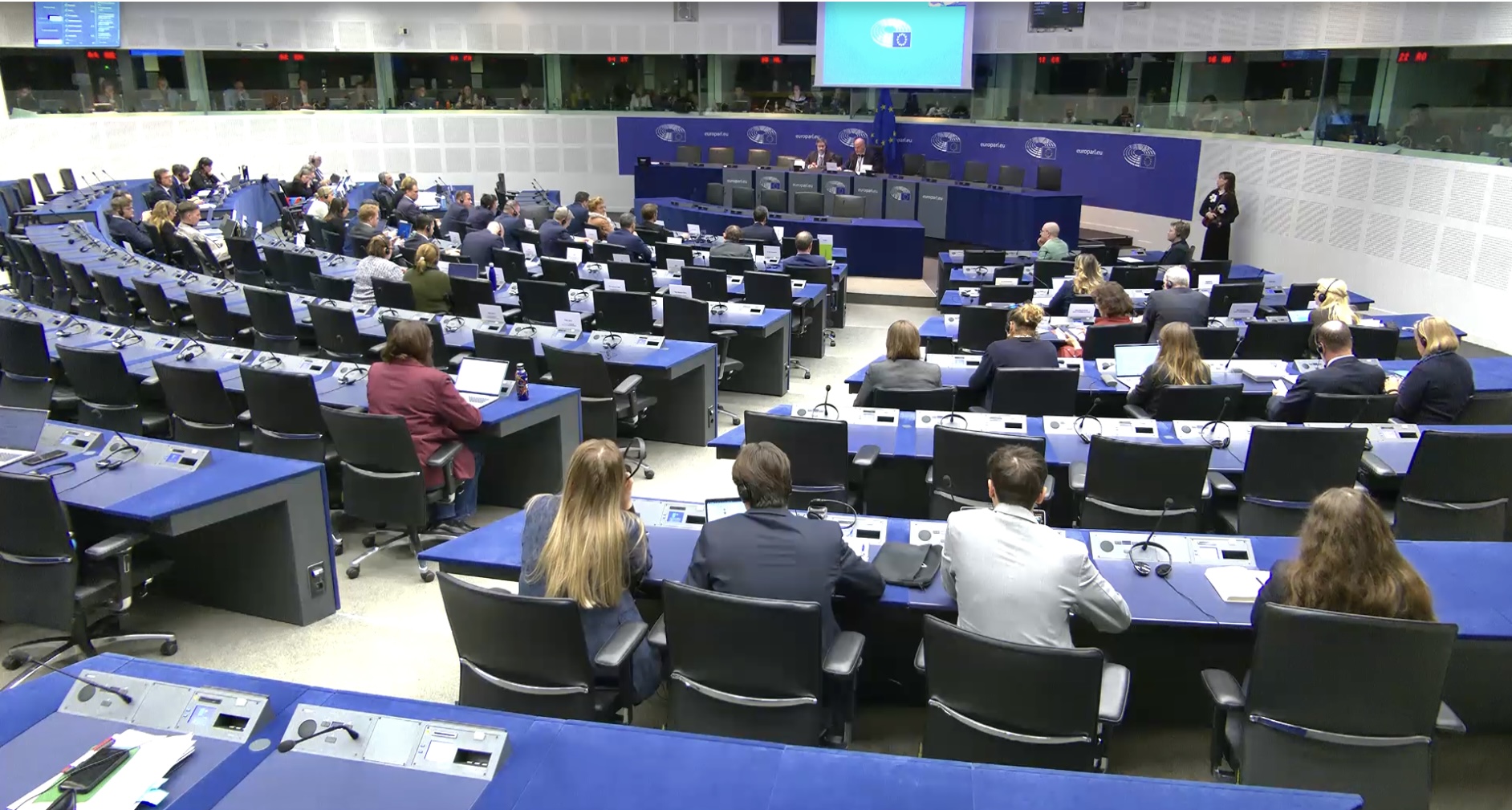
The European Parliament’s working group on the scrutiny of NGOs’ funding held its first meeting on November 26th, in Strasbourg. The working group was established before the summer under the umbrella of the Budgetary Control Committee, to investigate allegations of collusion between Green NGOs and the European Commission. For more than a year now, MEPs from right and far right groups have pushed the narrative that the Commission, especially the Directorates-General (DGs) in charge of the Green Deal, had financed environmental NGOs to lobby other EU institutions in its favour.
The facts most actors can agree on is that advocacy actions were indeed part of some work programmes submitted by recipients of EU grants under the LIFE programme (EU’s funding instrument for the environment and climate action). On one side, NGOs’ detractors claim this shows that the Commission was instructing and directing NGOs. On the other hand, both the NGOs and the Commission maintains that it was not the case: NGOs are responsible for drafting those action plans, they did so in view of their own views, the Commission did not steer them towards any kind of coordinated lobbying, and such advocacy was certainly not a pre-condition to obtain EU funding (a detailed explainer of the situation by Civil Society Europe can be found here). In fact, funding some advocacy work is not in itself against EU rules if the aim is to promote a richer policy debate and not targeted “shadow” lobbying. For now, serious commentators seem to side with the Commission assessment of what happened.
As for the 26th November’s meeting, it sadly went exactly as one would have expected. The Greens, S&D and Renew members promptly left, after delivering sharp criticisms of the bias and opacity of the process (see for example Daniel Freund’s position). Over almost three hours, the interviews of civil servants of the Commission only served to highlight the irreconcilable difference of perspectives, without bringing anything new to the debate. Centre-right MEPs went to great lengths to assure that they were only looking for the truth. In practice, all they seem to be achieving is providing a platform for the far-right to continue his work of decredibilization of both civil society and EU institutions.
More generally, the inquiry fits a worrying general pattern. Rather than seeing NGOs as partners with their own voices, some seem to want to restrict them to a strict interpretation of neutrality, reduced to doing “good things” but without the ability to criticize or influence the choices of elected officials. These views impoverish public life, directly playing into the hands of both business lobbyists and populist parties. In times of democratic challenges, we need Europe to strengthen the involvement of civil society bodies. It needs not be a naive process. There is always room to improve participation, diversity, and representativity. It is however hard to see what happened last month in Strasbourg as any kind of stepping stone towards such progress.
Benoit Willemaers SJ
JESC Secretary for European Affairs