Dear ELP-fellows, Dear esteemed guests, Dear friends,
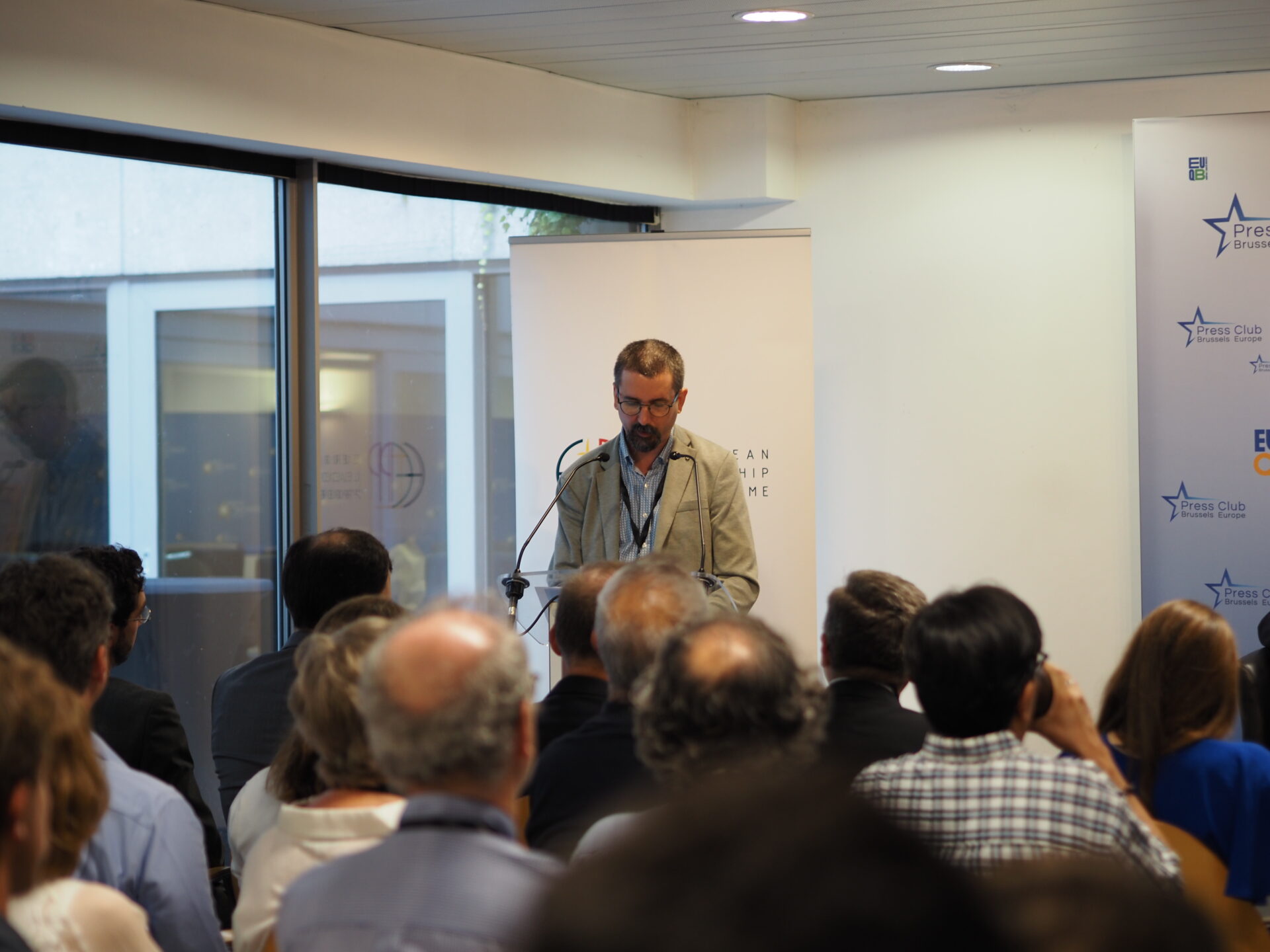
As an organization that is closely connected to the ELP programme and proudly supports its mission, it is always a pleasure to join your celebrations and to say a few words on behalf of UCSIA, the University Centre Saint Ignatius Antwerp, at this graduation ceremony.
Earlier today, I was in Lille, where UCSIA is coordinating a summer school entitled European Humanism in the Making. This year’s theme is war and peace. During the programme, I had the opportunity to speak about the just war tradition—a centuries-old attempt to answer one of humanity’s most difficult questions: under what circumstances, if any, can the use of force be justified?
It is a question that remains painfully relevant. We live in a world marked by instability, geopolitical tensions, and armed conflicts. At the same time, many people wonder whether traditional frameworks for thinking about war and peace still have anything meaningful to offer. In his first encyclical, Magnifica Humanitas, Pope Leo XIV observed that, and I quote, ‘it is important to reaffirm that the “just war” theory, which has all too often been used to justify any kind of war, is now outdated.’ This concern, however, is not new. Throughout history, thinkers have continuously challenged, refined, and adapted the tradition in an effort to make it more responsive to the realities of their own time.
This evening, I would like to briefly introduce you to one such thinker: Leonardus Lessius, a seventeenth-century Jesuit scholar who lived in the Low Countries, taught for many years in Leuven, and enjoyed an international reputation so impressive that he was often called the “Oracle of the Netherlands.”
For his thoughts on war and peace, Lessius belonged to a long intellectual tradition that stretches back to Saint Augustine and was further developed by medieval thinkers such as Thomas Aquinas. Yet what makes Lessius particularly interesting is that he sought to apply these ideas not merely in theory, but to the complex political, military, and religious challenges of his own era.
For Lessius, certain motives could never justify war. Greed, the pursuit of glory, the lust for power, and blind revenge were categorically unacceptable. The only legitimate reason for an offensive war, he argued, was the need to remedy a grave injustice that could not be resolved by any other means. Such injustice could involve material harm, such as plunder and destruction, but also violations of rights, dignity, or lawful freedoms.
He observed that, at the beginning of almost every conflict, both sides are convinced that justice is on their side. More often than not, each side claims a monopoly on moral truth. Lessius believed this was a dangerous illusion. Before resorting to war, a ruler had the duty to examine the claims of both sides with the impartiality of a judge. If, after careful reflection, he concluded that his own claim was as strong or no stronger than that of his opponent, he was not entitled to wage war. Only when he was morally convinced that justice clearly favoured his cause could force even be considered. In other words: the ruler had to take the position of an impartial judge. As Lessius writes himself: ‘In matters of war, a prince is a judge, and before he pronounces a verdict, a judge must carefully examine the fairness of the case at hand and the rights of both parties.’
This was an extraordinarily demanding standard, as Lessius realized himself very well. That is precisely why he strongly encouraged the use of arbitration and mediation. Whenever possible, conflicting parties should seek impartial third parties to help resolve disputes peacefully. Remarkably, he even outlined procedures for appointing international arbitrators—ideas that would only become institutional reality centuries later through international organisations and systems of global cooperation. Especially after World War I with the establishment of the League of Nations in 1920.
This afternoon, the students participating in our Summer School on Humanism in the Making visited the ‘In Flanders Fields Museum’ in Ypres. There they will have experienced the gigantic impact of the Great War on everyday lives and the wider surroundings. It was a cataclysmic event with countless deaths and disruptive consequences that was the result of Europe ‘sleepwalking’ (to use a reference to the famous book by historian Christopher Clark) and unwittingly stumbling into war.
Today, we find ourselves once again living through a period of profound uncertainty. Historical comparisons should always be made with caution, yet the Yale historian Odd Arne Westad invites us to reflect on certain parallels in his recent book The Coming Storm: Power, Conflict, and Warnings from History. The international order that emerged after the First World War—and even more decisively after the Second—has come under immense pressure. Preserving it, reforming it, and strengthening it will require courage, determination, and cooperation.
Above all, it will require a new generation of leaders. Leaders who are principled without being dogmatic. Confident without being arrogant. Ambitious without losing sight of justice and human dignity. That is an enormous task. But we trust in you.
The challenges you will face are different from those confronted by Leonardus Lessius four centuries ago. Yet the qualities he demanded of leaders remain as relevant as ever: integrity, humility, wisdom, and prudence.
And the task he set himself remains equally important: carefully engaging with different perspectives, weighing competing arguments, and applying the wisdom of a rich intellectual tradition to the pressing issues of the present. Not to preserve that tradition as a museum piece, but to keep it alive, relevant, and capable of speaking to new realities.
This attitude is rooted in a holistic vision of formation—one that connects wisdom, experience, and action. It is an attitude with which you have become familiar through your immersion in the Jesuit ELP programme. As a Jesuit institution, it is also at the heart of UCSIA’s mission, where we seek to build bridges between academia, social organisations, and civil society.
I sincerely hope that the experiences, friendships, and lessons you have gained through the ELP programme will help you cultivate that connection between wisdom, experience, and action throughout your lives and careers. Today we celebrate your achievement.
Congratulations to each and every one of you. May you continue to lead with courage, wisdom, and a profound sense of responsibility toward the communities and societies you will serve.
And finally, allow me to end with a piece of traditional wisdom.
If you want to die well, join the Dominicans.
If you want to live well, join the Benedictines.
But if you want to eat and drink well, join the Jesuits.
That part is for later.
Thank you.
Erik De Bom
University Centre Saint-Ignatius Antwerp (UCSIA)