Public debates about climate change often appear deeply polarised because people do not experience the same physical world in the same way. Scientific institutions speak in the language of global averages, satellite measurements and long-term climate models, while ordinary people – many scientists included – interpret reality primarily through their own bodily experience. If someone is shovelling snow in winter or struggling to pay increasingly expensive heating bills, it can be psychologically difficult to accept abstract claims about a warming planet. Human beings instinctively trust what they directly feel before they trust statistics. The planet is an abstraction; lived experience is concrete. As a result, public disagreement about climate change is often not simply a conflict between “science” and “ignorance”, but between different scales of reality and different forms of experience.
The next social phenomenon that natural scientists should be concerned about is methodological ambiguity in predicting global developments. Specifically, almost all written arguments begin with “scientific consensus”. As is well known, the natural sciences have determined the condition of the physical universe experimentally, using precisely defined statistical procedures. In addition to critical thinking about personal views about environmental changes, thoughtful people rightly question whether science is still operating according to established methods or if it has switched to majority-minority decision-making.
This tensions had become one of the defining paradoxes of contemporary civilisation.
The discussion has also acquired philosophical and religious dimensions. At least after Pope Francis’ encyclical Laudato si’, many Christians — particularly Catholics — have begun to approach climate change not only as a technical or political issue, but also as a moral and spiritual one. The encyclical frames environmental destruction as a disruption of humanity’s relationship with creation itself. In this sense, ecological imbalance can be interpreted not as divine punishment in a primitive sense, but as a consequence of disordered human behaviour within the natural world.

Methodology, ontology and epistemology of “global temperature”
Yet before one can form any responsible judgement on changes and particularly climate, a more basic question must be asked: how do we actually know that the planet is warming?
One may imagine a kind of three-dimensional framework linking methodology, ontology and anthropology:
- The methodological dimension concerns how climate data are produced. Measurements are unevenly distributed, partly modelled and historically concentrated around human settlements.
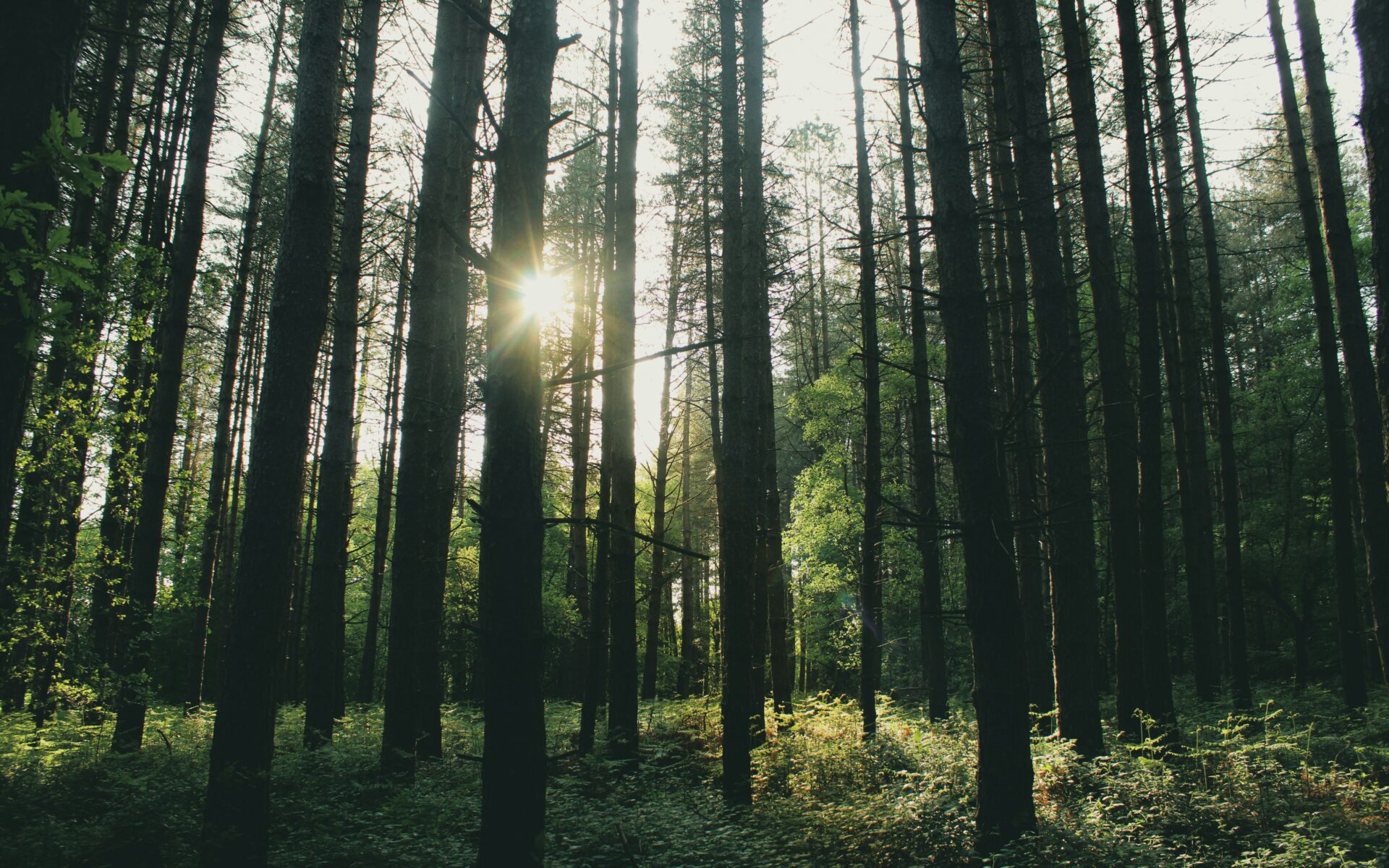
- The ontological dimension concerns physical reality itself. Cities genuinely possess different thermal properties from forests, wetlands or oceans. Vegetation moderates extremes; asphalt accumulates heat.
- The anthropological or epistemological dimension concerns human perception and interpretation. Growing urban and urban-lifestyle populations experience climate differently from rural populations, and these experiences shape political priorities, media narratives and collective consciousness.
When these three dimensions interact, a feedback loop may emerge. More people live in cities, therefore more people experience urban heat directly. Greater urban concentration leads to stronger political concern, greater media attention and more intensive public debate.
In details
The phrase “global temperature” sounds deceptively simple. In reality, it refers to an extremely complex scientific construction. The Earth does not possess a single thermometer. Modern climate data emerge from a combination of meteorological stations, ocean measurements, satellites, statistical interpolation and numerical modelling.
Historically, the longest-running weather measurements were established primarily in populated areas, for obvious practical reasons. People needed weather information for agriculture, navigation, trade, health and industry. Consequently, Europe, North America and urbanised coastal regions developed dense measurement networks much earlier than deserts, oceans, tropical forests or polar regions. In other words, the geographical distribution of climate measurements has never been entirely neutral; it broadly reflects the distribution of human settlement.
1850 — beginnings of global instrumental records
1950 — denser network of meteorological stations
1979 — start of modern satellite measurements
2025 — combination of ground stations, satellites and modeling
Modern climate science is fully aware of this limitation and compensates for it through sophisticated modelling techniques. Since 1979, satellites have provided nearly global coverage, but even satellite measurements are often misunderstood. Satellites generally do not measure surface temperature directly in the way a thermometer does. Instead, they detect forms of electromagnetic radiation and infer temperature through highly complex calculations. This does not make climate science fraudulent or fictitious. It simply means that “global temperature” is not a directly observable object in ordinary human experience. It is a carefully constructed scientific synthesis framed within a given methodology.
At the same time, another transformation has taken place — one that may be equally important for understanding contemporary climate anxiety. Human civilisation itself has become increasingly urban. In 1950, roughly thirty percent of humanity lived in cities. Today, around sixty percent do. Around 2007, humanity became predominantly urban for the first time in history. This demographic transition profoundly altered not only human society but also humanity’s average sensory experience of climate. Cities possess fundamentally different thermodynamics from natural landscapes. Forests, wetlands and oceans regulate heat through evaporation, shade, water circulation and biological processes. Concrete, asphalt, glass and steel behave differently. They absorb solar energy during the day and slowly release it at night. This phenomenon is known as the urban heat island effect.
Meadow or forest — reference temperature
Small town — +1 to +4 °C
Large metropolis — +5 to +10 °C
Extreme surfaces locally — up to +15 °C
Small towns are often several degrees warmer than surrounding rural areas, while large metropolitan regions may become dramatically hotter during heatwaves. Importantly, people do not merely experience air temperature. Human thermal perception is shaped by humidity, wind, radiation, shade, materials, airflow and bodily activity. Thirty-two degrees Celsius in a shaded forest near water does not feel remotely the same as thirty-two degrees in a dense urban canyon of concrete and glass.
This distinction is crucial because modern civilisation increasingly lives within artificial thermal environments. As urban populations grow, larger numbers of people directly experience amplified heat conditions created partly by the physical structure of cities themselves. Consequently, public sensitivity to warming also intensifies.
This does not mean that global warming is merely an illusion caused by urbanisation. There is abundant evidence of large-scale planetary change: warming oceans, retreating glaciers, rising sea levels and changing ecological cycles. However, urbanisation may amplify the everyday human experience of those changes and thereby strengthen the emotional and political intensity of climate discourse.
Hope in dynamics
Climate, species and ecosystems, including human, have always changed through time. Nature has never been static. Observed changes and evolution itself implies development and transformation. Modern science, including ecology in a sense of nature-history, far from abolishing older philosophical questions about creation and change, has in many ways expanded them by discovering the immense temporal scales of cosmic and biological history.
One of the most ignored aspects of the current climate discussion is ecology itself. What ecology? Well, the one who observes nature itself with the highest level of understanding. Air, forests, marshes, rivers, and oceans are not passive sceneries, but rather active systems of equilibrium. The observation of their hereditary dynamics provides a source of hope. Nature, through its processes—created by the same God—preserves us better than we (attempt to) preserve it. Can we conceive a greater foundation for hope than it is written in the protective “tools” that the Creator has provided us?
At this point, however, the discussion inevitably enters a theological and philosophical horizon. In European cultural history, nature was often implicitly imagined as something originally fixed and stable — a view shaped in part by simplified interpretations of creation narratives within Christian tradition. However, the biblical narrative of six-day creation, whether read literally or symbolically, affirms that the existence unfolds in time from day one to day six. Furthermore, in Genesis, everything is declared “good”, yet within a dynamic order rather than a frozen hierarchy. Seen in this light, modern science can even be interpreted as continuing a long trajectory within Judeo-Christian thought, albeit with a transformed understanding of time. What was once theological narrative has become measurable history; what was once symbolic duration has become physical chronology.
Within this broader framework, the contemporary ecological question gains further depth. The problem is not simply that nature changes — it always has — but that human beings change by increasingly inhabit artificial environments detached from natural processes. Many no longer experience darkness, silence, seasonal rhythm or the slow intelligence of vegetation. Life unfolds within technological systems that amplify heat, noise and acceleration, shaping not only comfort but perception itself.
This helps explain why climate discourse so often polarises between extremes: apocalyptic fatalism on one side and dismissive denial on the other. It seems that both fail to grasp the complexity of the situation. Humanity clearly transforms its environment, yet the planet is not a fragile laboratory object subject to simple control. It is a vast, dynamic system evolving over billions of years, within which human influence is powerful but localised.
Perhaps, then, the central question is not whether change is happening, but how humanity understands its place within a world that is both created and continually becoming. Human beings may/will never fully master the Earth, yet they remain responsible for the environments they construct — and, ultimately, for the meaning they ascribe to a world that is always in motion, always unfolding, and, in a deeper sense, always already “good” within its own dynamic order.
Jurij Dobravec
Eco-delegate of the Jesuit Slovenian Province